
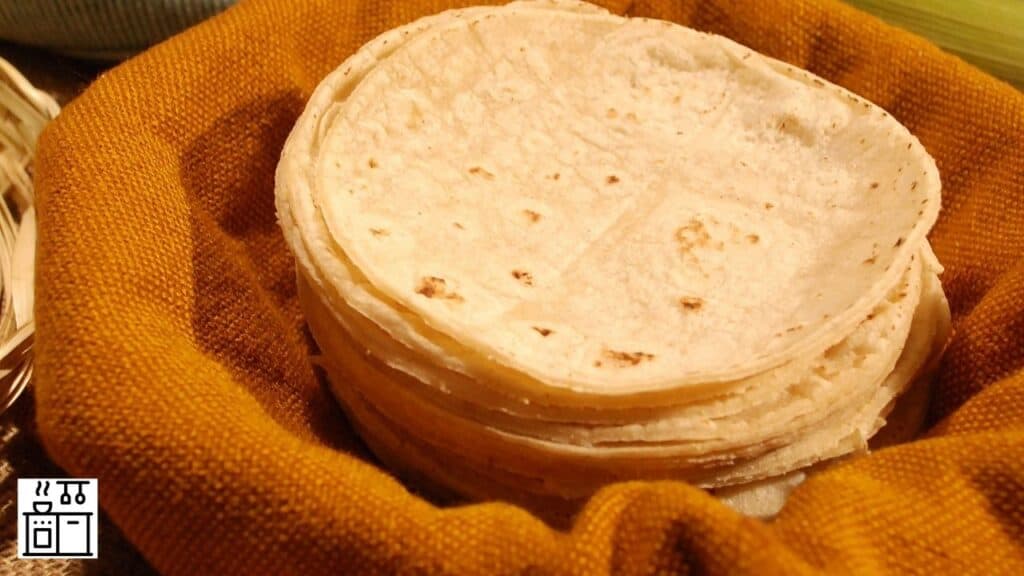
Yes, corn tortillas can go bad. How long they keep depends on the product or recipe, whether the package is open, and how they have been handled. Follow the storage instructions on your package rather than assuming that every tortilla has the same extra week past its date or the same refrigerated life.
Some corn tortillas are sold as shelf-stable products, while others need refrigeration. Homemade tortillas also need their own storage plan. These differences matter more than a general pantry, refrigerator, or freezer timetable.

Why Do Corn Tortillas Go Bad?
Corn tortillas are commonly made from corn masa, a dough made from treated corn, or from masa harina mixed with water. Recipes and commercial formulations vary.
Store-bought tortillas may also contain preservatives.
Preservatives, packaging, temperature, and handling can all affect how well tortillas keep. Being store-bought does not always mean a tortilla contains preservatives; Cool Chile, for example, makes preservative-free corn tortillas that need cold storage.
A refrigerator slows microbial growth, but it is not sterile. Clean hands, suitable packaging, and the right storage temperature help protect the food; they do not make it last indefinitely in the fridge.
How Long Do Tortillas Last?
How long tortillas will last will depend on the type of tortillas and how you store them.
Start by checking whether the package is meant for room-temperature storage or must be refrigerated. Then check what changes after opening. A storage instruction for an unopened shelf-stable product cannot be applied to a refrigerated product or a homemade batch.
Mission Foods says shelf life varies with formulation and storage, and that products bought refrigerated should stay refrigerated. It also says the refrigerated life of its ambient products depends on how they were stored beforehand. That does not establish a six-to-eight-week refrigerator life for every corn tortilla.
Check what the printed date means for your product. Mission describes its date as a freshness guarantee, while Mi Rancho describes its best-by date in terms of quality and freshness. A quality date is not a guarantee that food is safe, and it does not create a fixed safe interval after that date.
Follow any safety-related use-by or storage instructions on the package. If the wording or storage history is unclear, ask the manufacturer rather than assuming that refrigeration adds a set number of days.
Recommended: Should You Freeze Corn Tortillas? | Should You Freeze Chopped Onions? | How To Can Tomatoes Without A Canner? | Can You Peel Sweet Potatoes Ahead Of Time?
Do Corn Tortillas Go Bad In The Fridge?
Yes. Refrigeration can slow spoilage, but tortillas can still develop mold or other signs of deterioration.
The FDA recommends keeping a refrigerator at 40°F (4°C) or below. Use an appliance thermometer to check the temperature instead of relying only on the setting of the control dial.
If they come in resealable, refrigerator-safe bags, you can store them in the same bag after taking out what you need.
Close the package well. If it cannot be resealed, use a clean food-storage bag or container and keep the original date and storage instructions. Repacking the tortillas does not reset their shelf life.
Moisture alone is not a reliable spoilage test. Mi Rancho explains that condensation can occur normally in its corn-tortilla packages. That does not mean every wet or poorly stored package is safe; assess the product instructions, handling history, and any signs of deterioration together.
How To Tell If Corn Tortillas Are Bad?
Discard tortillas with visible mold, a suspicious odor, or other signs that make you doubt their condition. Do not taste them to decide whether they are safe.
Do not cut away a moldy patch and eat the rest. USDA guidance for bread and baked goods says to discard moldy food because contamination can extend below the surface. For tortillas that have been stacked against a moldy one, discarding the contacting stack is the cautious choice.
Hardness or stiffness can result from drying or staling, so it is not by itself proof of dangerous contamination. Equally, a soft tortilla that looks and smells normal is not automatically safe. The FDA warns that foodborne pathogens may be present without obvious spoilage.
Check storage instructions and handling history as well as appearance. Freezing, refrigerating, or warming a tortilla should not be used as a way to rescue food that is spoiled or has been handled unsafely.
Related: Why Dishwashers Take Long? | How Dutch Ovens Work? | Are Cutco Knives Good?
How To Store Tortillas To Extend Their Shelf Life?
Keep shelf-stable packages in the conditions specified by the manufacturer. Keep products that require refrigeration cold, and follow any after-opening instructions even if the unopened pack was shelf-stable.
Regardless of whether you choose to keep them in the refrigerator or freezer, you should always pack them well.
For homemade tortillas, refrigerate them promptly in small portions rather than leaving a large stack on the counter until it is completely cold. USDA explains that hot food can go directly into the refrigerator. Use a suitable recipe’s storage instructions; a commercial tortilla’s shelf life does not apply to your homemade batch.
If you freeze tortillas, use packaging that is suitable for the freezer. Reseal the original bag if appropriate and add a freezer-safe outer bag when needed. Divide them into portions that you will use together, remove excess air, and lay the packages flat to help preserve their shape.
Keep the freezer at 0°F (−18°C). USDA distinguishes frozen-food safety from quality: food that was handled safely and stays continuously frozen at this temperature remains safe, although its quality can decline. Freezing does not make spoiled food safe or reliably kill all microbes.
For the best texture, follow your manufacturer’s freezing and thawing guidance. Mission recommends thawing its corn tortillas in the refrigerator for a day or two. That is product-specific advice, not a promise that every package will thaw in the same time.
Plan refrigerator thawing ahead rather than leaving a frozen stack on the counter for an unspecified time. If your product gives directions for warming after refrigerator thawing or heating individual tortillas from frozen, follow those directions.

I have frozen sprouted corn tortillas that have been in the freezer unopened. I was going to use some today but saw the date on the package that was Nov. 2020. They look ok but had I best throw them out.