

Sweet potatoes can be roasted, fried, baked, boiled or used in desserts. Preparing them ahead can make cooking easier, but peeled and cut pieces need different storage from whole roots.
You can peel sweet potatoes before cooking, but refrigerate the cut pieces promptly and prepare them as close to cooking time as practical. Don’t assume every batch will keep safely for four days. For longer storage, use a tested freezing method that cooks the sweet potatoes first rather than briefly blanching raw pieces.
Things to Remember When Peeling Sweet Potatoes Ahead of Time
Wash your hands, tools and container before preparation. Scrub the sweet potatoes under running water before peeling, even if you will remove the skin. Washing reduces dirt and surface contamination; it does not sterilize the vegetable.
Can You Peel Sweet Potatoes the Day Before?
If you need a short preparation gap, put peeled pieces in a clean covered container in the refrigerator promptly. Cold water can help limit drying and air exposure, but it does not make the pieces shelf-stable or establish a four-day storage allowance.
Keep the refrigerator at 40°F or below and cook the pieces promptly. Do not leave them on the counter for hours while preparing other ingredients.
Recommended: Can Sweet Potatoes Be Microwaved? | Which Potato Is The Sweetest? | Are Potatoes Considered Legumes? | When Do Sweet Potatoes Go Bad? | Does Cornbread Have Corn In It?
How Far in Advance Can You Peel Sweet Potatoes?
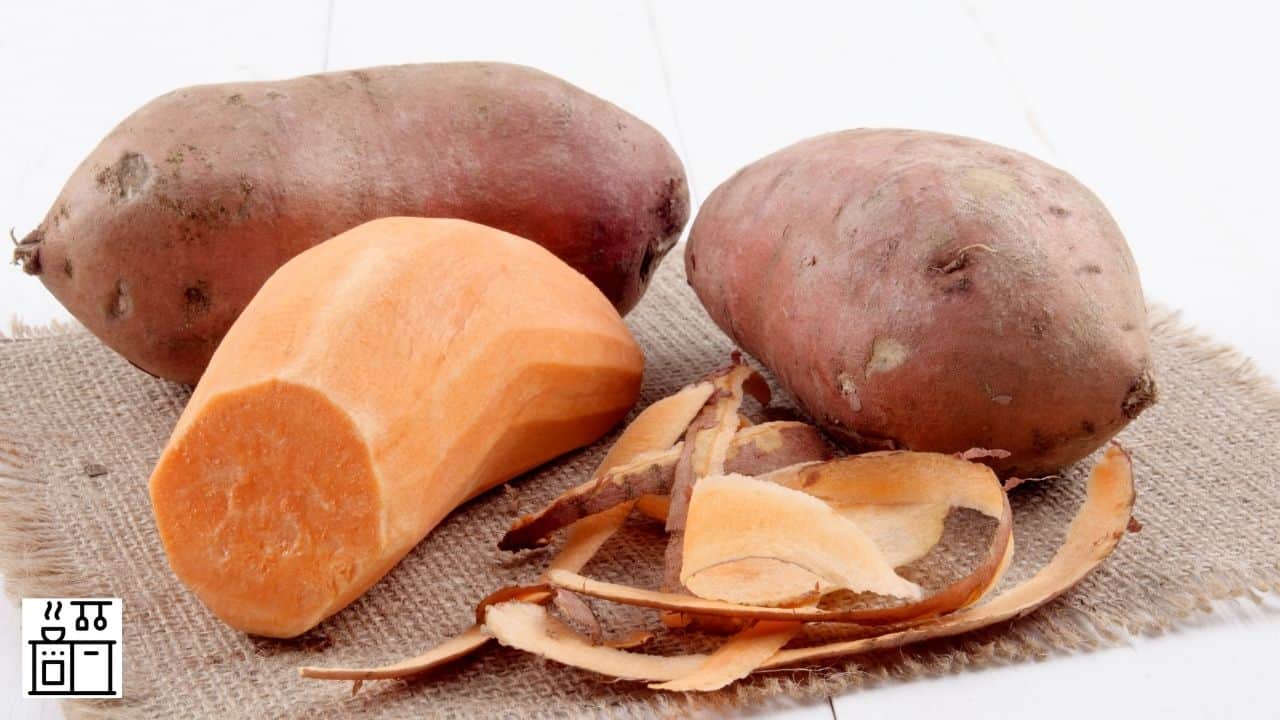
Prepare the cut pieces as close to cooking time as practical. Water can rinse starch from the cut surfaces, but it does not guarantee a crisp result. Texture also depends on the recipe and cooking method.
If you have prepared more than you need, cook them promptly and refrigerate or freeze suitable cooked portions instead of treating four days as a universal allowance for raw peeled pieces.
How to Freeze Sweet Potatoes for Longer Storage
Follow the National Center for Home Food Preservation’s freezing method. It calls for cooking washed sweet potatoes until almost tender, then cooling, peeling and cutting or mashing them before packing and freezing. A two- to three-minute blanch of raw pieces is not this method.
Read the complete directions for the form you plan to freeze. Use the method’s specified optional lemon-juice treatment to limit darkening, and leave its recommended headspace.
Cool promptly, keeping total room-temperature time within two hours, or one hour above 90°F. Pack in freezer-safe containers and label the portions. Removing excess air helps protect quality, but vacuum sealing does not make mishandled food safe or establish a new guaranteed storage period.
Why Do Peeled Sweet Potatoes Change Color?
Cutting damages cells and exposes compounds in the flesh to oxygen, which can cause enzymatic browning. This is not simply starch turning brown.
Fresh cut-surface browning differs from decay. Discard pieces that are moldy, slimy, rotten or unusually smelly. Normal appearance also cannot prove that the pieces were stored safely.
If you hold peeled pieces in water before cooking, keep the clean covered container in the refrigerator rather than on the counter.
Related: Are Dishwashers Worth The Cost? | Can You Put Dishwasher And Disposal Be On The Same Circuit? | Which Pots Will Work With Induction?
Can You Peel Sweet Potatoes Before Baking?
You can peel sweet potatoes before baking when your recipe calls for it. Leaving the skin on is also an option for suitable dishes. Peeling can give a smoother texture for mash or desserts.
If you leave the skin on, scrub it under running water before cooking and remove damaged areas. Washing does not remove every bacterium.
Can You Peel Sweet Potatoes Before Boiling?
Follow the recipe. Cooking with the skin on can make it convenient to peel afterward, while peeled pieces may suit a particular dish.
Nutrient retention depends on the variety and cooking method. Leaving the skin on does not guarantee a particular beta-carotene content, and peeled sweet potatoes do not lose all their flavor when boiled.
The FDA’s food-storage guidance recommends prompt refrigeration of perishable foods at 40°F or below. Packaging and a normal smell do not replace safe handling.
