
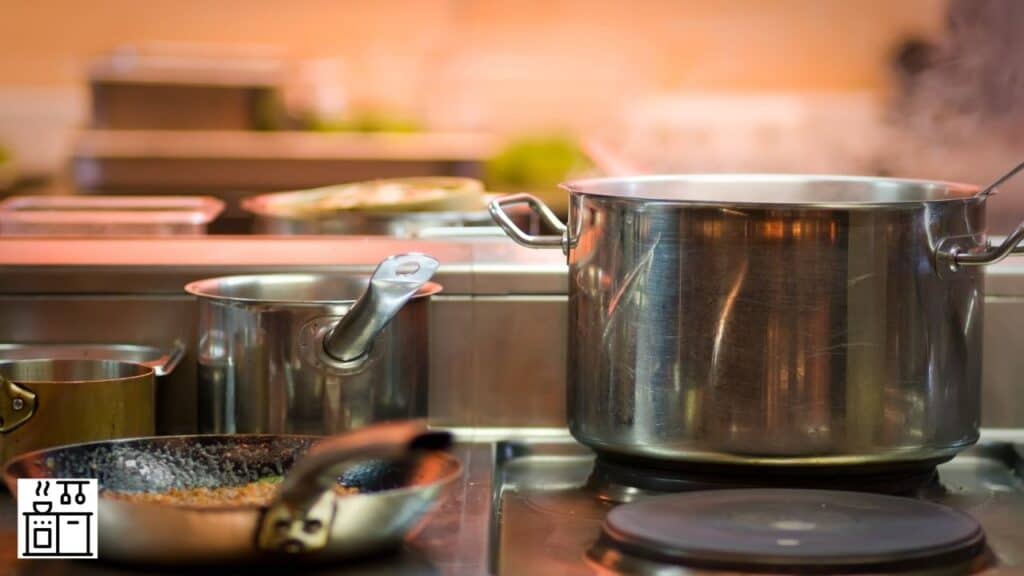
A dishwasher helps to clean a lot of dishes in one go. But can you put saucepans in the dishwasher?
A saucepan can go in the dishwasher only if its maker approves that use for the exact model. Check the body, handles and lid separately. Some makers permit dishwashing but recommend handwashing to preserve the finish.
Below we’ve provided some information that will help you to know if a saucepan can be washed using a dishwasher or not.
How Do Dishwashers Wash Kitchen Utensils?
Dishwashers use water, detergent and heat. Those conditions can affect some cookware finishes, exposed metals, coatings and handle materials.
Load an approved saucepan as the dishwasher manual directs, leaving space so it cannot strike other items or obstruct the spray arms. Contact between items can scratch or chip surfaces.
Check the pan’s care instructions for suitable detergents and cycles. Material names alone do not establish how the complete saucepan will tolerate the wash.
Can You Put Saucepans In The Dishwasher?
Find the exact model’s instructions on the packaging, in its manual or on the manufacturer’s website. A symbol on the base can help, but contact the maker if the rating is unclear.
If dishwashing is permitted, follow any restrictions for the body and lid. If it is prohibited or cannot be confirmed, use the maker’s handwashing method.
The material sections below describe considerations to check, rather than granting permission to every saucepan in a category.
Recommended Further Reading: Can You Put Saucepans In The Oven? | Can You Recycle Saucepans? | Can You Put Grill Pans In The Oven? | Are Knives Dishwasher-Safe? | 15 Unique Ways to Use a Saucepan
Can You Put Copper Saucepans In The Dishwasher?
Many copper saucepans need handwashing to protect the copper finish and any lining. Follow the exact model’s instructions rather than treating a copper-colored exterior as a complete material description.
Use the recommended detergent and cleaning tools. Correct care may differ for the copper exterior and the cooking surface.

Can You Put Stellar Saucepans in the Dishwasher?
Check the instructions for the particular Stellar range and model. A brand name does not establish one dishwasher rating for every saucepan it has sold.
If the maker permits dishwashing but recommends handwashing for appearance or longevity, follow that guidance. There is no universal schedule requiring you to alternate the two methods.
Materials and Finishes That Need Particular Care
These materials and finishes need particular attention when you check the manufacturer’s care instructions.
1. Cast Iron Saucepans
Bare seasoned cast iron is normally handwashed and dried promptly; dishwasher conditions can remove seasoning and encourage rust.
Enameled cast iron is different. Some models permit dishwashing, although their makers may recommend handwashing to preserve the finish. Use the instructions for your particular saucepan.
2. Aluminum Saucepans
Uncoated aluminum can discolor in some dishwasher conditions, and coatings or exposed edges can have their own restrictions.
Hard-anodized aluminum is not universally handwash-only. Some complete products are dishwasher-approved, while others are not. Check the model rather than assuming the anodizing determines its rating.
Avoid unsupported claims that a detergent scratch automatically makes the saucepan toxic. Follow the maker’s advice about damage, wear and replacement.
3. Non-Stick Saucepans
Dishwasher suitability varies with the construction and coating. Follow the maker’s instructions for washing and for any worn or peeling surface.
A small scratch is not proof of poisoning. For PTFE specifically, BfR does not expect harm from accidental ingestion of tiny detached PTFE particles. That does not override the manufacturer’s damage guidance or the need to avoid overheating.
If handwashing is recommended, let the pan cool and use a soft sponge and suitable detergent rather than abrasive tools.
Other Materials to Check by Model
Approved models exist in several material categories. Check the complete product’s stated care rating, including its handles and lid, rather than relying on this list alone.
1. Ceramic Saucepans
Ceramic can mean solid ceramic cookware or a metal pan with a ceramic-nonstick coating. These products do not all share one dishwasher rating.
Follow the particular pan’s instructions, including any advice to handwash a dishwasher-approved product to protect its finish.
Interesting Further Reading: Will Enamel Pans Stick? | What Are Wok Rings? | Are Strainers Dishwasher-Safe?
2. Stainless Steel Saucepans
Some stainless steel saucepans are dishwasher-safe, but the alloy name alone is not permission. Construction, handles, exposed layers and finishes also matter.
For a specific example, ProCook lists its Professional Stainless Steel 18cm/2.6L saucepan and lid as dishwasher-safe. That rating applies to that product, not to every stainless steel saucepan.
When dishwashing is approved, load it with enough space and use the specified detergent and cycle. Handwashing remains an option when the maker recommends it.
3. Glass Saucepans
Use the exact glass saucepan’s dishwasher instructions. Glass is not damage-proof, and a pan can include a handle, lid or decoration with different care requirements.
Protect it from impact during loading and unloading, and do not put damaged glass cookware back into use. A glass material name does not establish that dishwashing has no downsides.
