
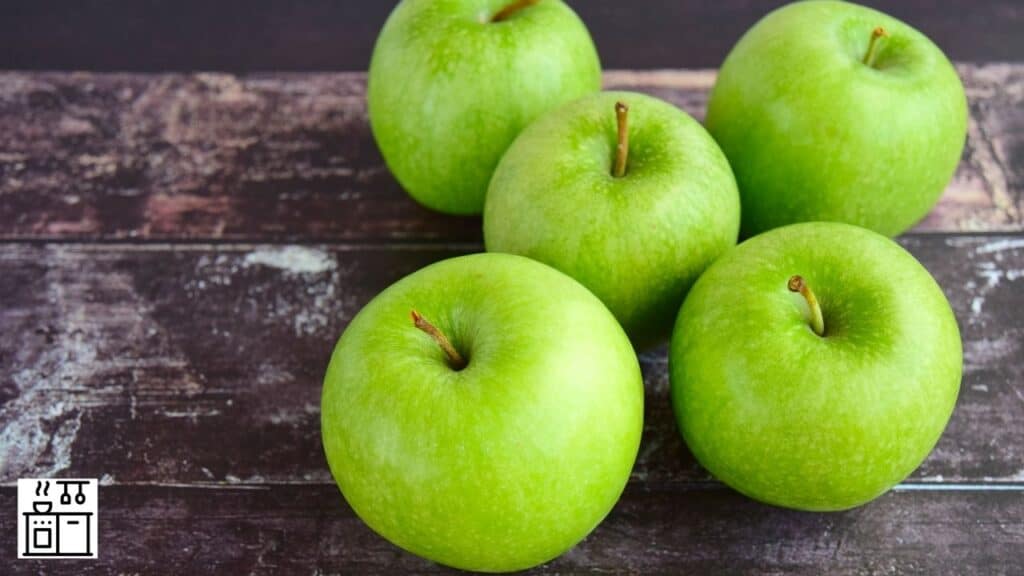
An apple’s flavor depends partly on the balance between its sugars and acids. Malic acid is the main acid in apples, but sweetness and aroma also affect how the fruit tastes. So, which apples should you choose if you want a sour flavor?
Granny Smith is a familiar choice if you want a distinctly tart apple. Empire, Pink Lady and Braeburn combine sweetness with tartness. Cortland is milder, with a sweet flavor and only a little tartness. Pacific Rose, Envy and Golden Delicious are generally sweeter choices.
Let’s delve deeper into this now.
What Makes Apples Sour?
There is a stunning variety of apples, each with a distinct flavor profile. These different flavors arise from the differences in their make-up.
To understand how this works, you should first know that all apples have sugars and acids in them.
Sugars are present in the form of fructose and glucose. Acids present in apples include malic acid and citric acid.
The balance of sugar and acid in an apple determines its prominent flavor.
An apple can contain acid without tasting strongly sour. The balance between its sugars and acids helps explain why some varieties taste tart while others taste sweet or sweet-tart.
As apples mature and ripen, their acidity generally decreases. The rate of change varies by variety, so tartness doesn’t follow the same timetable in every apple.
Storage life also depends on the variety and temperature. Keeping an apple longer won’t always improve it; apples that are stored too long can become soft and mealy.
Tart apples can be useful in cooking and baking, but sweeter apples can work too. For example, you can combine Golden Delicious with Granny Smith in a pie or crisp to balance sweetness and tartness.
Now let’s compare some tart and sweet-tart apple varieties.
Comparing Tart and Sweet-Tart Apples
Some apples taste distinctly sour, while others have a balance of sweetness and tartness. The varieties below offer different balances of these flavors.
Skin color alone does not tell you how tart an apple will taste. Look at the variety’s flavor description rather than assuming that every green apple is sour and every red one is sweet.
The examples below include distinctly tart apples, sweet-tart varieties and milder choices. They are not arranged as a measured sourness ranking.
Some varieties also have red or pink flesh. If that is the feature you are looking for, see the named examples in our guide to apples that are red or pink inside.
Green, Yellow and Blushed Apples
These varieties include tart cooking apples and eating apples with different balances of sweetness and acidity.
1. Granny Smith Apples
Granny Smith apples have green skin and firm, crisp flesh. The New York Apple Association describes them as juicy and tart.
You can eat them fresh if you enjoy a sharp apple, or use them in salads, pies and other baked dishes.
Stemilt notes that they hold their shape well when baked, which makes them useful when you want apple pieces in the finished dish. Skin color alone does not establish that an apple is at its peak flavor.
2. Newtown Pippin Heirloom Apples
Newtown Pippin has green to greenish-yellow skin. Cummins Nursery lists it for fresh eating, baking and cider.
Newtown Pippin apples have a mildly acidic flavor. Their flavor can improve in storage, but that doesn’t mean they will keep getting sweeter indefinitely.
3. Rhode Island Greening Apples
Rhode Island Greening apples have a tart flavor and firm, juicy flesh.
They’re primarily used for cooking, though fully ripe fruit can also be eaten fresh.
4. Shamrock Apples
Shamrock was bred in British Columbia from McIntosh and the Starkspur strain of Golden Delicious. The original Summerland release describes green skin, juicy flesh and a flavor that balances sugar and acid.
Grower descriptions differ, so its green skin should not be taken as a promise of strong sourness. Ask the grower how the fruit tastes in that season if you are looking for a particularly tart apple.
5. Golden Noble Apples
Golden Noble is an English cooking apple whose pale-green skin ripens to golden-yellow. The National Fruit Collection describes its flesh as acidic.
The collection reports that its flesh breaks down during cooking, which makes it useful for apple puree or sauce.
6. Lady (Api) Apples
Lady, also called Api, is a small apple with a red blush over a green or yellow background. Fedco describes a sweet-tart flavor, rather than an intensely sour one.
It can be eaten fresh or cooked. This old Lady apple is different from the apples sold under the Pink Lady brand, so check the name when choosing fruit.
Red-Skinned Apples: Sweet-Tart and Milder Choices
These red apples range from sweet-tart varieties to milder choices with only a little tartness.
1. Pink Lady Apples
Pink Lady apples have a bright and attractive reddish-pink color. They have juicy, crisp white flesh.
Pink Lady America describes a sweet-tart flavor and recommends the apples for fresh eating, baking, salads and sauce.
2. McIntosh Apples
McIntosh apples have red-and-green skin and tender, juicy white flesh. The New York Apple Association describes sweetness with a tart tang.
You can eat them fresh or use them in applesauce. Their tender flesh cooks down quickly, so bear that in mind when you want distinct apple pieces in a pie.
3. Empire Apples

Empire apples combine sweet and tart flavors with a crisp texture.
The New York Apple Association lists Empire for fresh eating, salads, sauces, pies and baking.
4. Cortland Apples
Cortland apples have a sweet flavor with a little tartness, so they’re a milder choice if you don’t want a sharply sour apple.
Cortland apples have red skin and tender, juicy white flesh.
They are useful for pies, baking and applesauce. The cut flesh is slow to brown, which also makes them a good choice for salads and fruit plates.
5. Braeburn Apples
Braeburn combines sweetness and tanginess with juicy, crisp flesh. The Washington Apple Commission describes red stripes over a yellow background and a light hint of cinnamon and nutmeg.
Braeburn can be eaten fresh or used in cooking and baking.
6. Jazz Apples
Jazz comes from a cross between Royal Gala and Braeburn. The brand describes crisp flesh and a balance of tangy and sweet flavors.
You can use Jazz apples for snacking, salads and baked dishes.
7. SweeTango Apples
SweeTango is the brand name for Minneiska apples, developed at the University of Minnesota from Honeycrisp and Zestar. The university describes crisp, juicy fruit with a sweet-tart flavor.
The apples have a deep red blush over a yellow background.
8. Winesap Apples
Winesap is an old red-skinned apple with a sweet-tangy, wine-like flavor. Albemarle Ciderworks describes it as suitable for cider and cooking.
Availability depends on the grower and market. Check locally rather than assuming that every store stocks this older variety.
9. Gravenstein Apples
Gravenstein apples work well in cooking, but they have a shorter storage life than many later-season varieties. It’s better to use them sooner rather than save them for long-term storage.
Gravenstein typically has yellow-green skin with red markings and crisp, juicy flesh.
Their flavor balances sweetness and tartness, and they work well in sauce, pies and cider.
