

Cilantro lime rice is a healthy and flavorful side dish.
Though it’s commonly paired with Mexican main course dishes, it works well with dishes from other cuisines like Asian and Indian too.
This recipe is traditionally made on a stove. But you can also prepare it in a rice cooker.
- Steps to Make Cilantro Lime Rice in A Rice Cooker
- Tips to Make the Perfect Cilantro Lime Rice in A Rice Cooker
- 1. Use the Correct Rice-To-Water Ratio
- 2. Use only Leaves and Tender Cilantro Stems
- 3. Add Lime Zest to The Cooking Water for More Flavor
- 4. Switch White Rice with Brown Rice for Added Nutrition
- 5. Add Seasonings According to Your Preference
- 6. Fluff the Rice Before Adding the Lime Zest and Lime Juice
- 7. Let the Rice Cool Slightly Before Adding the Cilantro
Steps to Make Cilantro Lime Rice in A Rice Cooker
The process of making cilantro lime rice in a rice cooker is slightly different from when you cook plain white rice.
Here are the steps for cooking cilantro lime rice in a rice cooker.
1. Gather the Ingredients
There are various versions of cilantro lime rice. But the main ingredients are the same. They are rice, limes, cilantro, oil, and salt.
Garlic or garlic powder and chili flakes are optional. Adding them makes the rice more flavorful.
Cilantro rice is typically made with jasmine rice, but other rice varieties work as well.
You can replace jasmine rice with long-grain white rice or basmati rice. Soak basmati only if the rice package or cooker’s instructions call for it.
You can skip soaking jasmine rice. Both varieties can be cooked in a rice cooker.
2. Measure the Rice
One cup of uncooked jasmine rice or basmati rice typically yields 3 cups of cooked rice.
The rice-to-water ratio may vary slightly according to the type of rice. So consider this factor when measuring the ingredients.
Use the measuring cup, water marks and capacity limits specified for your rice cooker and rice type. Do not substitute a generic two-thirds fill rule.
If you want to make a large amount of cilantro lime rice, prepare the rice in batches for consistent results.
3. Wash the Rice and Soak It if Needed
Before cooking the rice, it’s important to wash it. This applies regardless of the type of rice you choose for the recipe.
The easiest way to wash the rice is to use a colander or mesh vessel. Hold it under a running tap and squish and release the grains several times.
This will dislodge any dust on them. Repeat several times till the water runs clear.
The same process can be performed in a bowl. But you would have to drain the water between washes to get rid of the starch and dirt.
After rinsing, soak only if the rice package or cooker’s instructions call for it. Some programs already include a soaking stage.
Jasmine is a long-grain rice; use the water and soaking guidance for your particular rice and cooker.
4. Add the Rice and Water to The Cooking Pot
Once you soak and wash the rice, you can proceed to cooking. Add the rice to the cooking pot and pour adequate water.
Choose a suitable rice cooker setting to start the cooking process.
Plug in the rice cooker and engage the cooking function.
The rice cooker will start heating up, and the rice will cook in boiling water.
5. Wait for The Rice Cooker to Stop Cooking
The rice cooker controls the cooking program, but follow its safety instructions and keep the vent clear.
Let the selected program run as directed by the manual, keeping the steam outlet clear.
When the rice is done, it will either switch off automatically or switch to the “Keep Warm” mode.
At this stage, we usually recommend waiting for a few minutes before opening the lid of the rice cooker.
A resting period can help the rice absorb moisture. Follow the rest time recommended by the cooker or rice instructions.
After the recommended rest, open the lid carefully and keep your face and hands away from the steam.
6. Add the Lime Zest and Lime Juice
After the program and recommended resting period finish, open the lid carefully.
Fluff the rice with a fork or spatula to separate the grains. Then, add the lime juice and lime zest. Stir it in.
Place the lid back on and let the rice rest for a few minutes. It will absorb the flavors of the lime at this stage.
7. Mix the Rest of The Ingredients
After the rice has absorbed the lime zest and rested for a few minutes, transfer it to a serving bowl.
Now, mix the olive oil, garlic powder or chopped garlic, chopped cilantro, salt, and chili flakes in another bowl. Combine them well.
Then, add this mixture to the rice and toss it till well combined. Your cilantro lime rice is ready to enjoy.
8. Serve Hot or Refrigerate Promptly
Cilantro lime rice tastes best when you serve it fresh and hot. However, you can make a big batch at once and store the excess.
Divide leftover rice into shallow containers and refrigerate promptly. Do not wait for a large batch to reach room temperature; refrigerate within two hours, or one hour if the surroundings are above 90°F.
Following USDA’s leftovers guidance, keep leftovers at 40°F or below and use them within 3 to 4 days, or freeze them. Reheat to 165°F before serving.
Tips to Make the Perfect Cilantro Lime Rice in A Rice Cooker
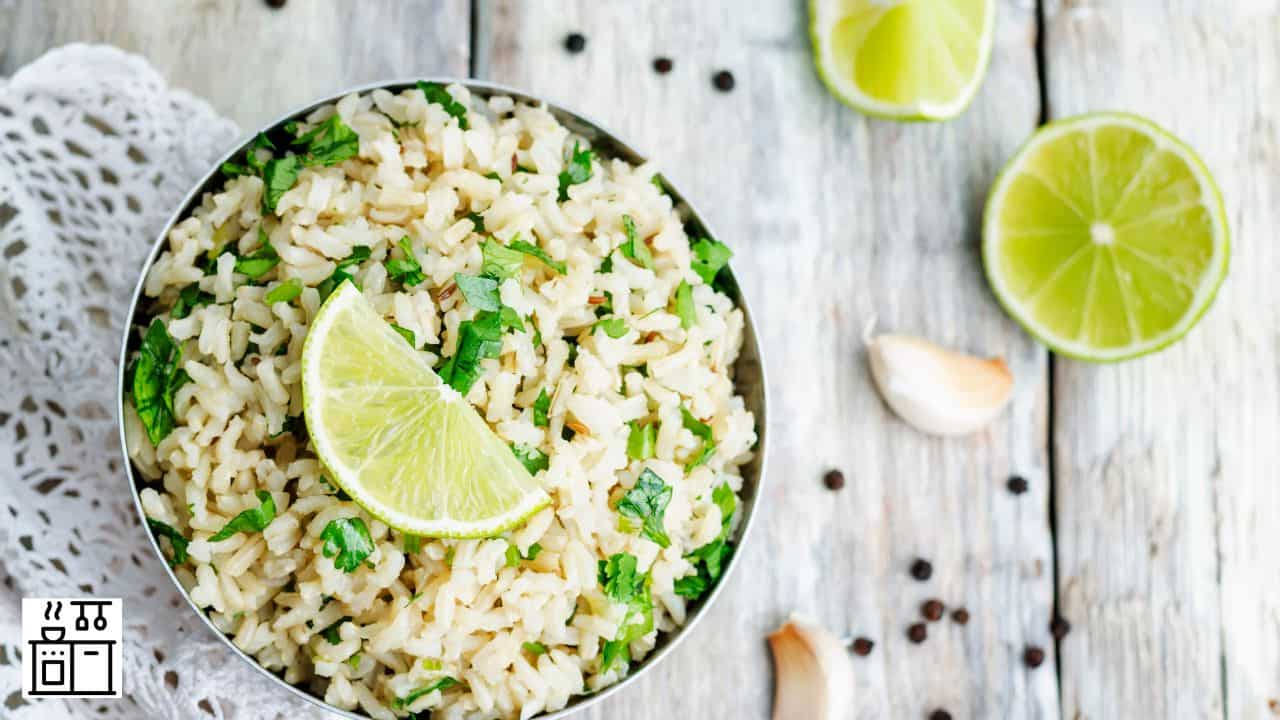
The result depends on the rice, water level and cooker program.
Nevertheless, here are a few tips to improve the quality of the results.
1. Use the Correct Rice-To-Water Ratio
The rice can turn out to be too mushy or dry if you get the rice-to-water ratio wrong.
Start with your cooker’s instructions for the rice type. Ratios vary with the model, rice and whether it was soaked; use the supplied rice cup when following pot markings.
If the rice package gives only stovetop directions, do not assume that ratio applies unchanged to a rice cooker.
2. Use only Leaves and Tender Cilantro Stems
The flavor of rice will be affected by the quality of the cilantro you use.
We recommend using lightly packed tender cilantro leaves and stems for the best results.
They deliver a light but noticeable flavor without overpowering the dish. Also, one cup of lightly packed cilantro is enough for a cup of rice.
3. Add Lime Zest to The Cooking Water for More Flavor
The traditional way to prepare cilantro lime rice is by adding lime zest at the end of the cooking process. This yields a mild but exciting flavor.
However, if you want a stronger flavor, add some lime zest and lime juice to the cooking water. The rice will absorb it and achieve a stronger flavor.
4. Switch White Rice with Brown Rice for Added Nutrition
To add more fiber to the recipe, you can simply switch out jasmine or basmati rice with brown rice.
The flavor will end up being slightly different.
Brown rice adds fiber, but it is not automatically a lower-calorie choice. Use the brown-rice program and water level if the cooker provides them.
5. Add Seasonings According to Your Preference
Apart from garlic and chili, you can experiment with various other seasonings for an interesting twist to this recipe.
You can add bay leaves, cinnamon, or star anise. You can also replace the water with vegetable broth for more flavor.
Using broth would, however, change the color of the rice and make it brown.
6. Fluff the Rice Before Adding the Lime Zest and Lime Juice
The rice grains will usually stick together after cooking. Don’t directly add the lime zest to this clumpy rice.
Instead, use a fork or spatula to first break the rice apart.
The grains will separate and turn fluffy. Add the lime zest and lime juice to the rice only after this stage.
7. Let the Rice Cool Slightly Before Adding the Cilantro
Cilantro leaves wilt and become a dull green when exposed to heat. This can make the dish look unappetizing.
To retain their fresh green color, wait till the rice cools slightly. Then, add the cilantro leaves.
This will help the leaves retain their bright green color and make the dish more attractive.
