

If you cut squash, you may not be able to use it all at once. You may prefer to store the excess for later use.
But can you cut squash ahead of time?
Cutting and Storing Squash in Advance
Cutting and storing squash in advance is a convenient and practical way to save time when cooking this vegetable.
Cut squash can be refrigerated for a few days or frozen for longer storage. The preparation and storage times depend on whether it is winter or summer squash.
There are different varieties of squash, and each variety has its distinct defining characteristics.
Let’s briefly look at them.
Understanding Types of Squash to Store Them Properly
The commonly available varieties of squash include the following.
Butternut Squash
Butternut squash is one of the most readily available varieties of squash.
It has a smooth exterior with tan color and golden-yellow flesh. Butternut squash is a winter squash.
You can roast, grill, or stew this vegetable.
Spaghetti Squash
Spaghetti squash has a distinct texture that resembles strands of spaghetti when cooked.
Due to this characteristic feature, it’s widely used as an alternative to pasta.
This squash has a delicious nutty flavor.
Acorn Squash
Acorn squash is a small squash with ridged skin that is often dark green. It has a delicate nutty flavor.
You can roast or bake this squash.
Other Common Squash Varieties
Apart from these winter squashes, you will also find zucchini and other summer squashes in the market.
They are widely used in soups, stews, casseroles, and other recipes.
Related: 8 Ways to Store Corn | 8 Tips to Store Kiwis
Steps to Cut and Store Squash
The basic preparation is similar, but winter and summer squash need different cutting and storage methods.
Let’s explore the different tips and tricks to cut these vegetables and store them for later use.
1. Prepare the Squash
Before cutting squash, wash your hands and clean your tools and chopping board.
Rinse the whole squash under running water, even if you plan to remove the skin. This helps remove dirt from the surface.
Then dry it well with a clean kitchen towel.
For winter squash, trim the ends and set a flat cut side on the chopping board so the squash is steady.
2. Cut the Squash for Your Recipe
Once the winter squash is steady, use a sharp knife to cut it in half.
This will reveal the center with the seeds and pulp.
Use a spoon to scoop out the seeds and pulp.
If the recipe requires peeling, you can get rid of the skin. Then, slice or cube the squash into pieces of desired size.
For young zucchini and other summer squash, trim the ends and cut rounds, spears, or cubes to suit the recipe. Their tender skin and seeds are edible. Older squash with tough skin and large seeds may need peeling and seeding.
3. Store the Squash in The Refrigerator
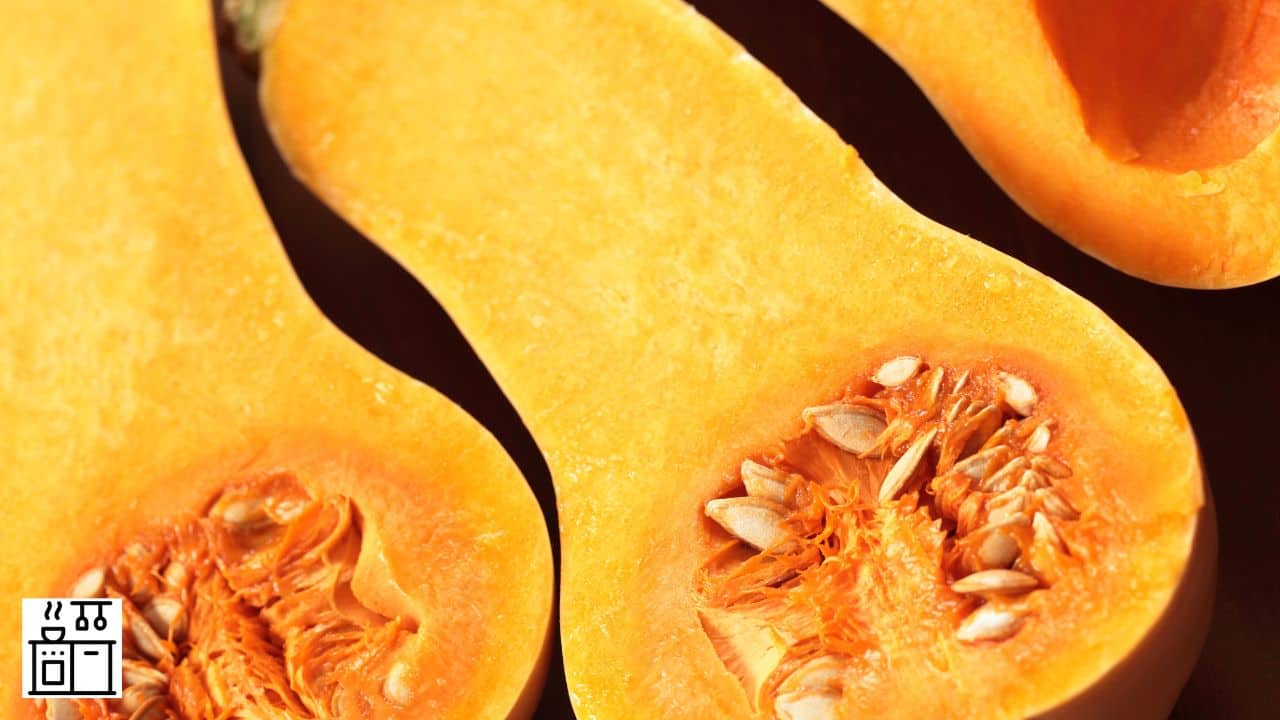
Once you cut any vegetable, the flesh is exposed to air and moisture.
It’s important to use it quickly or store it carefully at this stage.
Refrigerate cut squash promptly. FDA recommends refrigerating perishable foods within two hours, or within one hour when the temperature is above 90°F.
The easiest way to refrigerate cut squash is in an airtight container or bag.
Transfer the cut pieces into an airtight bag and press it down to expel all the trapped air.
Then, seal the top and place it in the crisper compartment of the refrigerator.
You can also store it in an airtight container with a lid that seals tightly.
Whichever compartment you use, keep the refrigerator at 40°F or below.
For uncooked, prepared winter squash, Illinois Extension recommends refrigeration for up to three days. For fresh-cut summer squash, Alabama Extension gives up to five days.
Use it sooner when possible, since storage quality also depends on its freshness and handling. These times are not a guarantee that squash is safe after improper storage.
4. Freeze Cut Squash for Long-Term Storage
If you want to cut and store squash for a long time, it’s best to freeze it.
The method depends on the type of squash. Raw diced winter squash can be frozen, while sliced summer squash should be blanched first to help preserve its quality.
For raw winter-squash cubes, spread the peeled, chopped pieces in a single layer on a baking tray lined with parchment paper.
Place the tray in the freezer until the pieces are solid.
Transfer the frozen pieces into a freezer bag or a freezer-safe container.
If you use a bag, press down to expel any remaining air from the bag.
Illinois Extension suggests up to three months of freezer storage for these uncooked winter-squash pieces.
For zucchini and other summer squash, the National Center for Home Food Preservation recommends young, tender squash cut into half-inch slices. Blanch the slices in boiling water for three minutes, counting from when the water returns to the boil.
Cool the slices promptly in cold water, then drain and pack them in freezer containers, leaving half an inch of space at the top.
Seal and label the packages, and keep the freezer at 0°F or below.
5. Cook or Thaw Frozen Squash
You can directly add refrigerated squash to dishes.
Frozen squash does not always need thawing. Most frozen vegetables can be cooked from frozen, so follow the recipe’s instructions.
If a recipe needs thawed squash, thaw it in the refrigerator. Do not leave it on the counter to thaw.
Frozen squash can become softer and release liquid as it thaws.
Soups, stews, and casseroles are useful options when the pieces have softened.
6. Store Whole Squash According to Type
Whole winter squash, such as butternut and acorn squash, can be stored in a cool, dry, well-ventilated place.
Oregon State University Extension recommends 50°F to 55°F for winter squash. Under suitable conditions, acorn squash keeps for about one to two months and butternut squash for two to three months.
A kitchen counter may be warmer than this, so do not assume it will provide the same storage life.
Whole zucchini and other summer squash should be refrigerated. Maine Extension recommends an open or perforated bag in the crisper.
Once you cut either type of squash, refrigerate it promptly.
Cover the cut piece or put smaller pieces in an airtight container or sealed bag, and follow the refrigerator-storage guidance above.
Related: How to Cut and Store Cucumbers Ahead of Time? | 9 Steps to Prepare and Store Candied Yams
How to Use Stored Squash?
You can use refrigerated squash in recipes that call for fresh squash.
Use it soon after cutting to limit changes in texture.
Soups, stews, and casseroles are options, and you can also grill or roast refrigerated pieces.
Frozen squash may become softer and release liquid as it thaws.
Choose a recipe that suits that softer texture, such as a soup or stew.
