

A slow cooker can make ribs tender, but the cooking time depends on the cut, quantity, recipe and appliance. Plan around a complete recipe rather than trying to make every rack cook faster.
- Time Required to Cook Ribs in a Slow Cooker
- 9 Tips for Preparing and Slow-Cooking Ribs
- 1. Thaw safely and keep the ribs refrigerated.
- 2. Prepare the membrane as the recipe directs.
- 3. Follow the cooker’s preheating instructions.
- 4. Use the stated sauce and liquid amounts.
- 5. Choose a recipe for the cut and quantity you have.
- 6. Cut and arrange the ribs as directed.
- 7. Match the recipe to the type of ribs.
- 8. Use a stated Low or High schedule.
- 9. Follow the recipe’s lid and foil instructions.
Time Required to Cook Ribs in a Slow Cooker
There is no single Low or High cooking time that works for all ribs. A smaller rack, a different cut, or a sauce change can alter the result.
For one specific example, KC Masterpiece’s recipe uses three to four pounds of pork baby back ribs. It first bakes them at 400°F for 15 minutes on each side, then cooks them with its stated sauce and seasonings on Low for six to eight hours. That schedule belongs to the complete recipe, including the oven step; don’t apply it to every batch of raw ribs.
Use a food thermometer. FoodSafety.gov lists 145°F with a three-minute rest for whole cuts of pork and beef. Ribs may need further cooking for the tenderness you want; a minimum safe temperature and a fall-apart texture are different checks.
9 Tips for Preparing and Slow-Cooking Ribs
1. Thaw safely and keep the ribs refrigerated.
Thaw ribs before slow cooking. Use the refrigerator, allowing enough time for the rack’s thickness. Do not thaw them on the counter or leave them out to reach room temperature.
Cold-water or microwave thawing must be followed by immediate cooking. Keep refrigerator-thawed ribs cold until you are ready to prepare them.
2. Prepare the membrane as the recipe directs.
Removing a tough membrane can improve the eating texture, but it does not establish a shorter safe cooking time. If the recipe calls for removal, loosen an edge carefully and pull it away. Keep knives and raw-meat utensils away from ready-to-eat food.
Related: Slow-Cooking Chicken Thighs
3. Follow the cooker’s preheating instructions.
Do not assume every slow cooker needs 15 to 20 minutes of empty preheating. Follow its manual and the recipe, especially when using a ceramic insert. Avoid sudden temperature changes, and don’t use an empty preheat unless the manufacturer permits it.
For more about settings, see our slow-cooker temperature guide. Use your own appliance’s instructions to choose the setting.
4. Use the stated sauce and liquid amounts.
Sauce adds flavor, but adding liquid does not guarantee that ribs cook faster. Use the recipe’s quantity rather than assuming every rib recipe needs no liquid or that extra sauce will reduce the cooking time.
5. Choose a recipe for the cut and quantity you have.
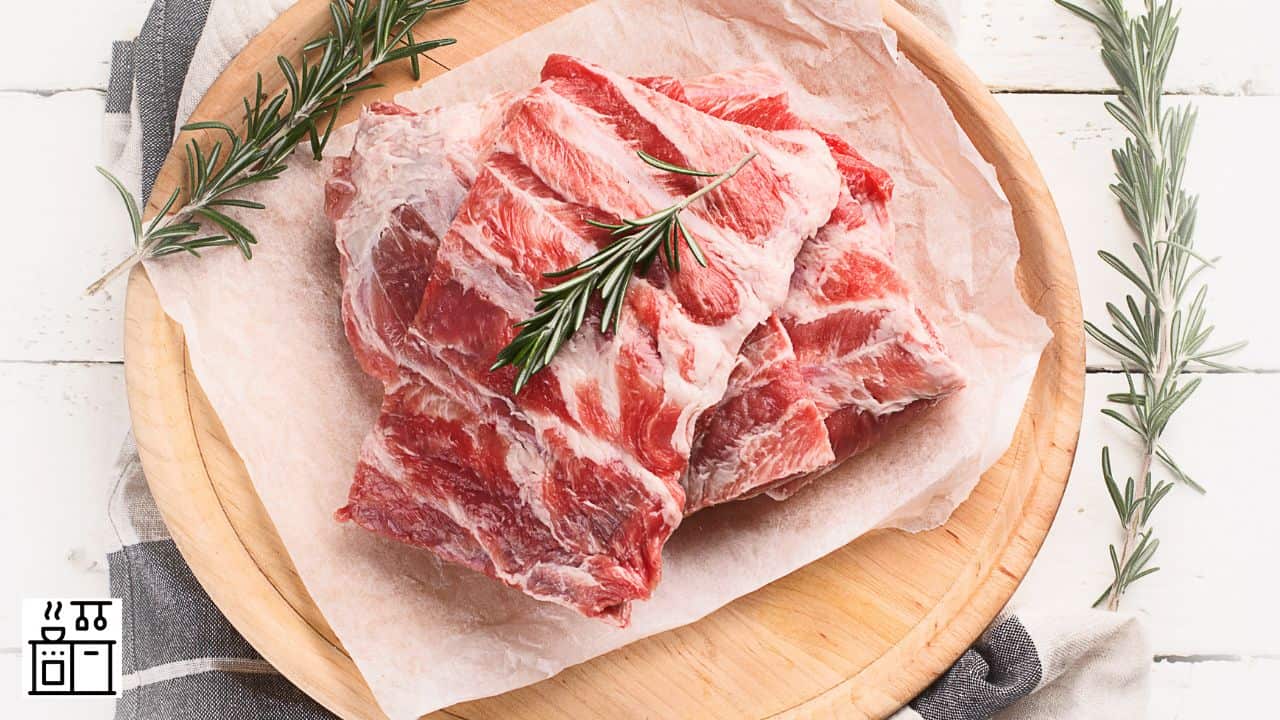
The amount of meat, its thickness, the other ingredients and how the pot is filled all affect cooking. Don’t assume a four-pound pack has one fixed schedule, or that halving the weight halves the time.
Check the appliance’s capacity. FoodSafety.gov recommends filling a slow cooker about one-half to two-thirds full, with the lid fitting properly.
6. Cut and arrange the ribs as directed.
A recipe may call for dividing a rack so it fits the pot. Follow its portion size and arrangement. Cutting ribs in half or stacking them with sauce does not by itself validate a shorter cooking schedule.
7. Match the recipe to the type of ribs.
Baby back and St. Louis-style ribs differ in size and shape. Use a recipe for the cut you bought rather than assuming one always cooks faster or that every St. Louis-style rack must be cooked on Low.
8. Use a stated Low or High schedule.
If the recipe provides a High-setting option, that may fit the time you have. Don’t assume High always takes half as long as Low or switch settings after three to four hours without directions.
Start cooking promptly after preparation. Do not use a delayed-start timer with raw meat in the cooker. Keep the lid closed except for recipe additions and doneness checks.
Related: Slow-Cooking Pork Shoulder | Slow-Cooking Pot Roast
9. Follow the recipe’s lid and foil instructions.
Smoker methods for wrapping meat do not establish a slow-cooker rule. Don’t wrap ribs at 175°F to 180°F, or use a claimed “stall” temperature, as a general shortcut.
Use the normal cooker lid. Only add a foil wrap when the recipe and appliance instructions support it. Check the meat with a food thermometer and follow the recipe for tenderness and resting.
Refrigerate perishable leftovers within two hours, or within one hour if the surrounding temperature is above 90°F.
