
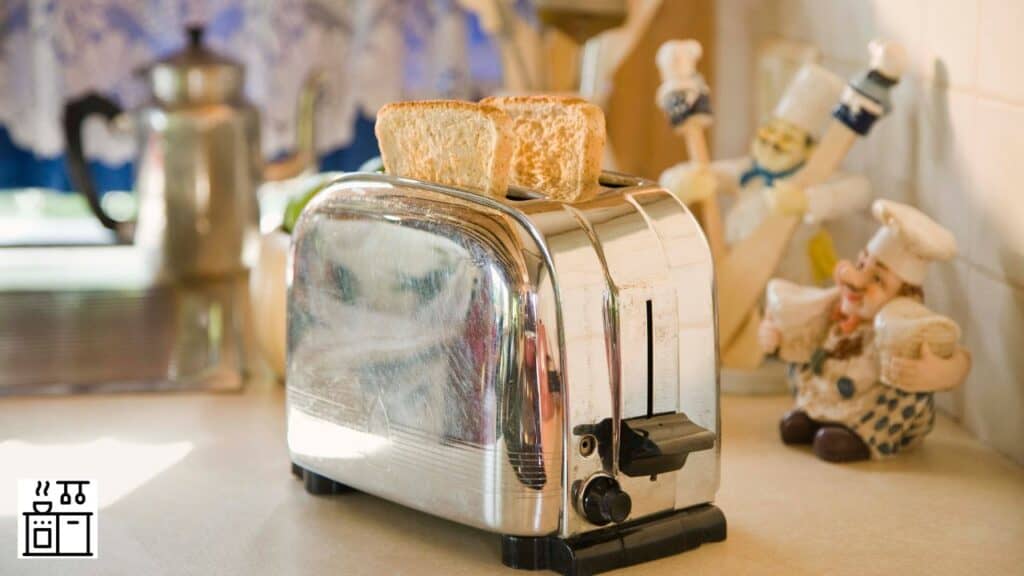
Most households that serve toast for breakfast have toasters.
These convenient electrical appliances brown plain bread, making it crunchy and hard. It automatically pops the bread back up when ready, so you can take it out and enjoy it.
So, how does a toaster perform this sequence of actions? Let’s find out.
Parts of A Toaster
To understand how a toaster works, we should first know about its different parts and principle of operation. The following parts are common in pop-up toasters, but the controls and release mechanism vary by model.
External Casing
This is the outermost part of the toaster made of plastic or metal.
Regardless of the material used for construction, the important thing is that the external casing is always made of heat-resistant materials.
Bread Rack
The bread rack of a toaster is inside the casing. It’s a grooved metal structure that holds the bread in place.
This part is always made of metal that conducts heat.
Handle
On the outer casing of a toaster, there is a lever-like extension that moves up and down. This is connected to the bread rack.
You can use this to lower the bread rack into the toaster after placing the bread.
Electric Circuit
The toaster has an electric circuit that changes electric current into heat or infrared radiation that causes the toasting action.
In many conventional toasters, resistive heating elements become hot when electric current passes through them.
Spring
The toaster has a spring that moves the bread rack up and down. Pressing the handle lowers the bread rack and compresses the spring in a typical pop-up design.
When the bread has been toasted as per your requirement, the spring will push it back up. This action is accompanied by a distinct popping sound.
Sensor
Some toaster designs use temperature sensing as part of their control system. Others use a timed cycle, and their controls do not guarantee a particular shade for every bread.
The release mechanism allows the spring to raise the bread rack when the cycle ends.
Timer
For toasters with a variety of settings, each one is linked to a timer that determines how long the bread needs to be toasted.
When the time goes off, the toasting process ends, and the tray is released so that the toast pops up.
Cord
Toasters are electric devices that you can connect to the regular power supply. They have a cord that you can plug into the power socket to activate it.
Steps to Operate a Toaster
Toaster controls vary, with browning, defrost, reheat or bagel settings on some models. Read the instructions before the first use.
Most toasters will either have just a handle or a knob and a handle for the settings. Some toasters allow you to set the browning level using a knob or lever.
Let’s now look at the different steps involved in the operation of a toaster.
1. Prepare the Toaster
With the toaster unplugged and completely cool, clean away crumbs as its manual directs before the next use. Place it on a clean and stable surface, like the kitchen counter or a table.
Keep it away from anything that is inflammable. Plug it into the power socket and switch it on.
2. Place the Bread in The Slots Provided

The bread tray should be in the elevated position when you switch on the toaster.
Insert suitable plain bread or another approved food into the slot. It should appear above the surface of the toaster at this stage. Few things to note here:
- Use only foods that the toaster manual permits, within its slot-size limits. Do not force oversized food into a slot or add butter or other toppings before toasting.
- Even if a toaster has multiple slots, you can toast just one or two slices of bread at a time. Leave the other slots empty if you wish.
- Follow any slot-orientation markings and the instructions for the selected setting. Bagel functions vary by model, so do not assume that every toaster heats the two sides differently.
3. Set the Browning Level
Some toasters have control knobs to set the toasting level. If present, turn the dial to the setting you want. The higher the setting, the darker the toast ends up becoming.
The setting could either be a number or a color. So the dial may display a number from 1 to 5. Alternatively, it may point to light, medium, or dark.
4. Lower the Handle
Once you set the browning level, press down the handle to lower the bread slices into the toaster.
By lowering the bread into the toaster, the slices are exposed to even heat from the heating element. The toasting process begins.
You will notice that the inside of the toaster has a bright red color from the heating filaments.
5. Wait for The Timer to Run Out
The toasting time will depend on the setting you choose. The bread will remain inside the toaster till the timer runs out.
When the cycle ends, the carriage releases the bread. To stop early, use the Cancel control or the stopping method described in your toaster’s manual.
If bread begins to burn, stop the cycle promptly using the toaster’s normal control and disconnect it if you can do so safely. Do not force the handle.
For the next batch, you can reduce the heating level to prevent the same thing from repeating.
If the toast jams, stop the cycle, unplug the toaster and let it cool. Do not restart it or force the lever to free the bread.
6. Remove the Toasted Bread
Depending on the model, the toaster may make a “ding” sound to indicate the end of toasting. When you hear this sound, you can take the toast out of the toaster.
However, some models will not make a clear sound. They will just pop the bread out.
Always keep an eye on the toaster, even though it will automatically pop up when done. With continuous heating, some toasters tend to burn the bread.
So observing it will help you prevent it from burning.
Use the model’s extra-lift feature if one is provided, and let the toast cool enough to handle. Do not reach into the slots or probe with tools.
If the filaments on the inside touch a metal surface, it can cause an accident.
How to Remove Stuck Toast?
If the bread remains stuck, don’t pull it out with a metallic instrument.
Remove the plug and wait for the toaster to cool completely. Follow its manual’s removal procedure without inserting hard or sharp tools into the slots. For example, the Cuisinart CPT-2500C manual gives unplugging, cooling and jam-removal precautions for that model.
Serve the Bread and Clean the Toaster
Serve the toasted bread with a spread or plain, as you prefer. The toasted bread will be stiff.
So you can easily spread jam, preserves, peanut butter, or anything you like on the surface by laying it flat.
Unplug the toaster and wait for it to cool completely before cleaning. Most toasters have a removable crumb tray at the base. This tray will catch all the crumbs.
Empty and clean the crumb tray as the manual directs. Gently tip an unplugged, cooled toaster upside down only if its own instructions allow that method.
Keep the toaster unplugged throughout cleaning and reinstall the crumb tray before its next use.
