
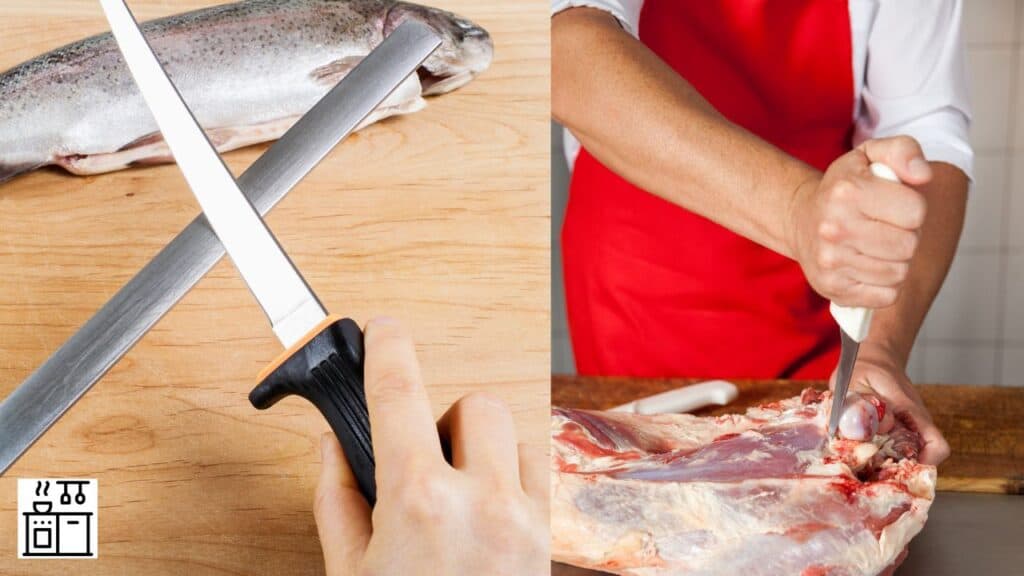
Knife sets usually include a few special knives like a fillet knife or a boning knife.
These knives have distinct shapes and are specially designed for cutting fish and meat.
Although fillet knives and boning knives look similar, they aren’t the same.
Each one serves a different purpose, and they have minute differences. Let’s look at them in closer detail.
How to Distinguish Between a Fillet Knife and A Boning Knife?
Choosing the right type of knife makes a task much easier.
At a glance, boning knives and fillet knives look quite similar.
However, they are distinct because they are built for different tasks.
You can use them interchangeably for certain needs.
However, we recommend using the right knife based on whether you wish to bone or fillet meat or fish for a better result.
Here are some of the important differences between a boning knife and a fillet knife.
1. Start with the Cutting Task
A boning knife is designed to work along bones and connective tissue so you can separate meat from the bone. A fillet knife is useful for precise slicing and removing fish skin.
Some tasks overlap. Choose the blade intended for the food and cut rather than treating either name as a guarantee of a better result.
2. Compare the Actual Blade Length
Both categories come in several blade lengths. A longer blade may suit a larger piece of food, while a shorter one can be easier to control in a tight space.
Compare the actual model dimensions. There is no rule that every fillet knife must be longer than every boning knife.
3. Check Thickness and Shape
Thickness, curve and tip shape vary between models. A slender blade can help you follow contours, while a stiffer design may suit a different trimming task.
Neither category is permission to chop through hard bones or pry joints apart. Use a purpose-made tool for those tasks and do not force a delicate blade.
4. Check the Foods Specified by the Maker
Fillet knives are not necessarily fish-only tools. WÜSTHOF lists its Gourmet 6-inch flexible fillet knife for fish, meat and fruit.
That product example does not establish every fillet knife’s intended use. Check the maker’s guidance for the model you own and choose a blade suited to the food.
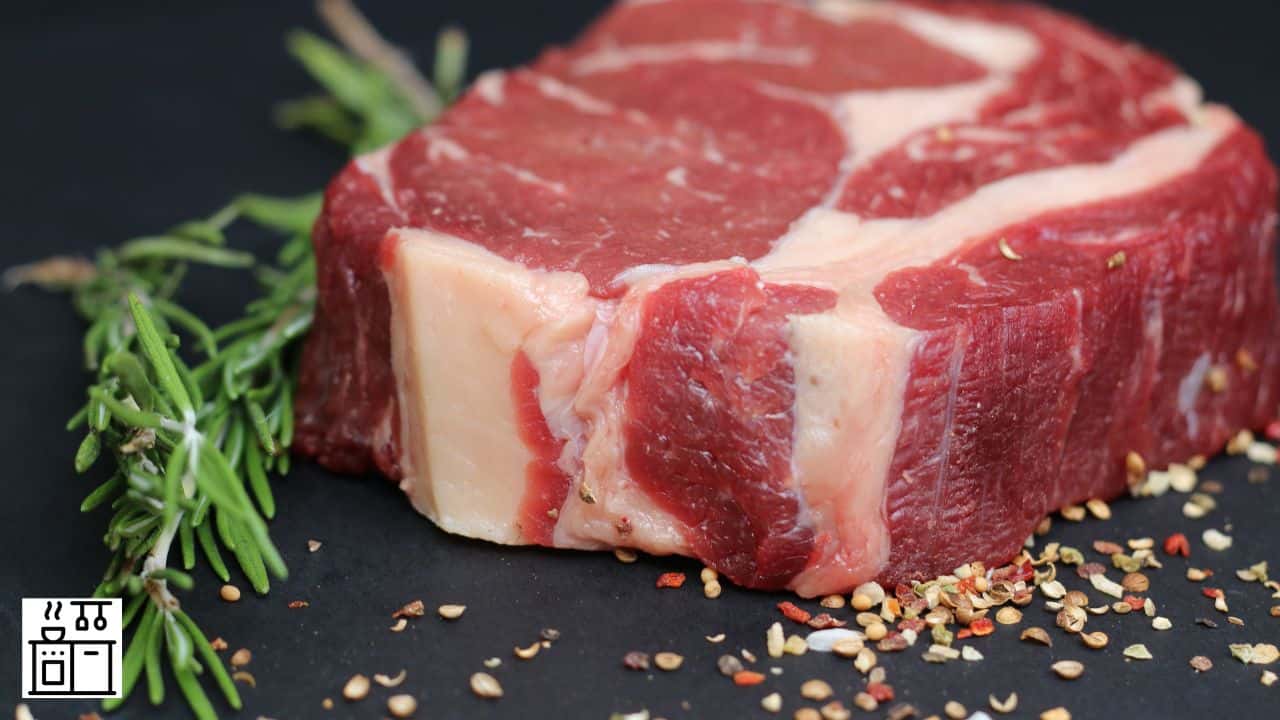
You can use a boning knife for fish and meat.
5. Compare the Finished Blade, Not a Material Assumption
The alloy, heat treatment and blade geometry determine a knife’s properties. The words boning and fillet do not establish a universal hardness or strength ranking.
Both categories can use stainless or other blade steels. A thin blade is not automatically poor quality, and a heavy blade is not automatically suited to cutting bones.
6. Corrosion Resistance Still Needs Care
A stainless blade resists corrosion but is not rust-proof. Other steels can also be used in knives, with different care requirements.
Wet food preparation is a reason to clean and dry the knife promptly. Corrosion resistance does not remove the need to maintain the cutting edge.
Knife corrosion depends on the blade and its care, not simply whether it is called a fillet or boning knife.
7. Choose the Right Flexibility
Boning and fillet knives can differ in flexibility according to their intended tasks. Compare the actual model rather than assuming that all knives in one category share a shape or stiffness.
A flexible blade may help follow a contour; another task may call for a firmer blade. Use the design recommended for that cut, including when trimming silverskin from meat.
- Are Knives Safe to Put in the Dishwasher?
- 9 Different Uses of A Cheese Knife
- 14 Uses of A Fillet Knife
8. Maintain Both Types Properly
Keep either knife sharp using the maker’s recommended tool and angle. Honing and sharpening have different purposes, and specialist blades may need professional service.
Handwash, dry promptly and store the edge securely as directed. Do not compensate for a dull or unsuitable blade by applying more force.
