

The flavor and goodness of homemade baked beans are special and rarely matched by any store-bought variety.
However, the recipe takes time to prepare.
So it makes sense to prepare baked beans in advance or cook a big batch to last a couple of days.
But can you make baked beans ahead of time?
Cooking Baked Beans Beforehand
You can make baked beans ahead of time, but cooked beans are perishable. Refrigerate them promptly rather than leaving the pot at room temperature for several hours.
Refrigerate homemade cooked beans and opened store-bought beans as directed. An unopened shelf-stable can has different storage instructions.
Use cooked baked-bean leftovers within three to four days when refrigerated promptly at 40°F or below.
If you wish to store them for even longer, freezing is the best option.
They will hold up for several months in the freezer.
You can thaw and use them when needed.
How Are Baked Beans Made?
The key ingredients in baked beans are soaked haricot or navy beans, tomato paste, ketchup, vegetable, or chicken broth, seasoning ingredients like onion, garlic, salt, and pepper, Worcestershire sauce, water, and a sweetening agent like sugar, and vinegar.
Depending on the recipe, there may be fewer or more ingredients.
Use a reliable recipe, because dried beans, canned beans and different sauces require different preparation.
Prepare dried beans using the recipe’s soaking and cooking steps before combining them with the sauce. Follow the stated method rather than assuming every bean can simply simmer gently from raw.
Prolonged cooking softens the beans, and they blend into the thick and flavorful sauce.
Corn flour slurry is also added at the very end to adjust the texture.
The cooking process takes nearly two hours.
So it makes sense to prepare a big batch that you can use for a few days at least.
However, like all perishable food, freshly made baked beans will spoil in a few hours.
When you leave it at room temperature, it starts spoiling within a few hours and becomes unsafe for consumption.
According to the USDA, you shouldn’t let perishable food sit out for longer than two hours at room temperature.
Beyond this time, the risk of food contamination increases.
So, if you leave your baked beans on the counter overnight, they will not be safe for consumption the next day.
How to Store Baked Beans for Later Use?
If you make baked beans ahead of time or have leftovers, promptly refrigerate them to extend their shelf-life.
Keep cooked baked beans refrigerated at 40°F or below and use within three to four days.
Use a shorter storage period if the recipe or product instructions require it.
If you will not use the leftovers within three to four days, freeze portions promptly rather than waiting until the end of the week.
Baked beans can be frozen, although texture and flavor may change.
Suitable packaging helps protect quality during frozen storage.
Divide a large batch into shallow containers for rapid cooling. Hot food can go into the refrigerator; do not wait for a large pot to reach room temperature on the counter.
Use food-safe containers that suit the food temperature and leave the recommended space for expansion when freezing.
Condensation alone does not determine safety. Prompt cooling, cold storage and clean handling matter.
When the beans cool down, transfer them into an airtight container or freezer-safe bag.
If you are using a container, keep a small gap between the food and the lid to allow for the expansion of the liquid during freezing.
If you are using an airtight bag, get rid of the excess air before sealing the package. Then, place it in the freezer.
Frozen baked beans will hold up for several weeks.
If you will be using smaller portions at a time, divide them into smaller portions and freeze them separately.
This will allow you to retrieve only the quantity you need at a time and leave the rest undisturbed.
When it’s time to use the baked beans, remove them from the freezer and let them thaw.
Thaw baked beans in the refrigerator, not on the countertop.
We recommend thawing it in the refrigerator overnight to make sure there are no frozen bits.
Reheat leftovers on the stove or in a microwave until they reach 165°F throughout. Stir and check several places with a food thermometer.
Baked beans tend to become dry during reheating.
Add a little broth or warm water to the mixture to adjust the consistency.
How to Identify if Baked Beans Have Gone Bad?
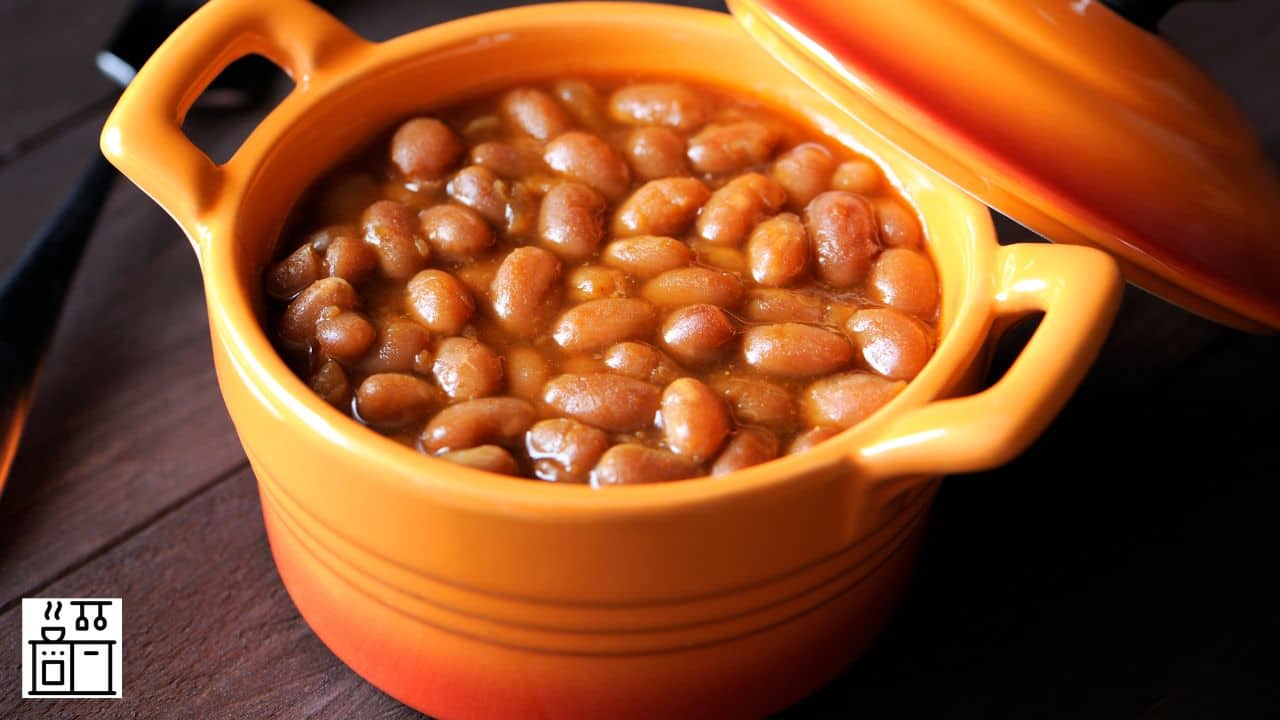
The rate at which food spoilage occurs depends on various factors, like ambient temperature and humidity.
Food spoils faster in hot and humid places than in cold places.
Exposure to moisture and heat will further speed up the spoiling process.
In the case of baked beans, the signs of spoilage may not be evident at first.
Since this dish has high liquid content, it’s a favorable breeding ground for bacteria and other germs that cause foodborne illnesses.
Bacteria multiply rapidly when you leave baked beans outside for more than a few hours.
However, there may not be any visible signs like a change in color, texture, or smell until much later.
Unsafe food may have no obvious change in appearance, smell or flavor. Do not wait for a visible sign before discarding food that has been handled unsafely.
Here are some signs to look for that indicate it’s time to throw your baked beans.
1. It Has Been Sitting out For a Long Time
Bacteria can grow in perishable food held at unsafe temperatures. Two hours is a maximum handling limit, not a point when growth suddenly starts.
If you leave your baked beans on the kitchen counter for several hours at room temperature, spoilage will have set in.
When the ambient temperature is higher than 90°F, the rate of deterioration is higher.
Without safe hot or cold holding, refrigerate or serve the beans within two hours, or one hour above 90°F.
Refrigerate them promptly rather than waiting until the handling limit.
If you accidentally leave it out for much longer, the risk of food poisoning increases.
Toss any baked beans, homemade or store-bought, if you left them out overnight as they would have spoiled.
2. It Smells Funny
Fresh baked beans are fragrant and flavorful.
When it’s still warm, it will have a delightfully indulgent aroma from the different herbs and flavoring agents in the recipe.
However, if the beans smell somewhat off or funny, it indicates spoilage.
Throw it away if your baked beans have an off-putting smell or if they smell different from when you made them.
Related Reading:
- Can You Make and Store Royal Icing Beforehand?
- Can You Cut and Store Zucchini Beforehand?
- Can You Make Frosting Beforehand?
3. Change in Texture
Baked beans have a thick and creamy texture when fresh.
However, it dries up over time and thickens in the refrigerator.
If safely stored beans thicken, a little liquid may help the texture during reheating. Still check that the leftovers reach 165°F throughout.
Unexpected texture changes can be a reason to discard the beans, but texture alone cannot show whether they were stored safely.
4. Do Not Taste Beans to Check Safety
Never taste baked beans to find out whether they are safe. Harmful bacteria or toxins may be present without an unusual flavor.
Use the storage history instead. Discard beans left out beyond the safe time limit, kept too long in the refrigerator or showing spoilage. Reheating is not a way to rescue food that has been stored unsafely.
