
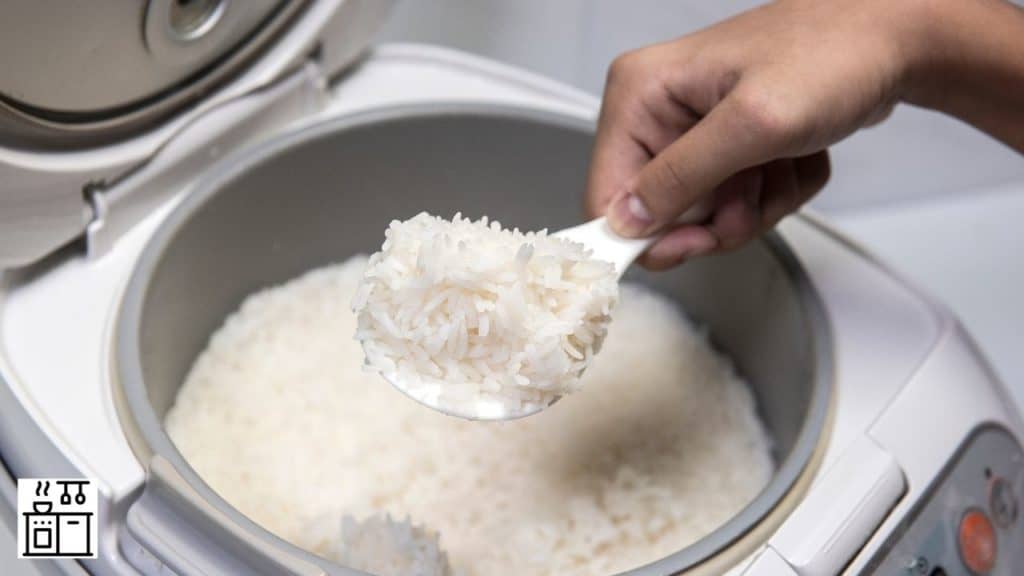
A rice cooker may use less water than a method that boils rice in excess water and drains it, but it is not guaranteed to use less than every covered stovetop method. The right amount depends on the grain, batch size, cooker and selected program.
Use the Cooker’s Measurements
Measure dry rice with the cup supplied for the appliance, then use the matching water line or recipe. A rice-cooker cup may differ from a standard kitchen measuring cup. Zojirushi’s rice cooker FAQ explains its supplied cup measurements.
Do not use a universal one-to-one ratio for jasmine, short-grain, brown, wild and parboiled rice. Each can need different instructions, and the same grain may be handled differently by different cookers.
How Do You Read the Water Lines?
Place the inner pot on a level surface and use the marks corresponding to the rice type and number of supplied cups. A water line normally indicates the final level after rice is in the pot, not that number of cups of added water. Follow the manufacturer’s water-line guidance for the selected grain.
If your grain or recipe is not covered, use a manufacturer-approved recipe rather than guessing a ratio or borrowing an unrelated stovetop method.
What Happens With Too Little or Too Much Water?
Too little water can leave rice hard or undercooked. Too much can make it overly soft and may contribute to overflow. Neither problem is solved by assuming the cooker will always stop at the perfect texture.
Stay within the program’s maximum capacity. Rinse when instructed, but do not use rinsing as a guarantee that an overfilled cooker will not bubble over.
Does a Cooker Always Finish Faster?
No. Some programs deliberately include soaking and steaming stages, and brown-rice programs can take longer than white-rice programs. Compare complete cooking times for the actual methods instead of assuming a 15-minute average. The NS-ZCC manual describes the programs and cooking stages for that model.
An automatic transition to Keep Warm makes cooking more convenient, but it does not mean the appliance is completely off or that supervision and food-holding instructions can be ignored.
How Can You Avoid Wasting Water and Rice?
Use a reliable recipe for your cooker, measure consistently and adjust only within its guidance after checking the finished texture. That is more useful than claiming a fixed household water saving for every rice cooker.
Related Reading
- cook jasmine rice
- Can Microwave Ovens Explode? (3 Reasons Why They Can Explode)
- Should a Microwave Be Vented?
- Tips for Preventing and Removing Internal Rust from a Microwave Oven
- Comparing the Advantages and Disadvantages of Using A Blender or A Mixer
- Can You Set and Forget Your Rice Cooker for Hours?
- How to Stop Your Deep Fryer from Exploding?
- The Science Behind Working a Deep Fryer
- Finding Out Which Type of Cooking Oil is Most Suitable For a Deep Fryer
- Could a Rice Cooker be Responsible for an Explosion or Fire?
- Is it Possible to Clean a Rice Cooker in the Dishwasher?
- Do Deep Fryers Smell? [Which Deep Fryers Don’t Smell?]
- Why Do Blenders Leak? [How To Fix A Leaky Blender?]
