

Whole raw sweet potatoes can keep longer than cooked leftovers when they are stored in suitable conditions. If you have cooked a large batch of sweet potatoes and want to store the excess for later, you may think of refrigerating or freezing the leftovers. But, can you freeze cooked sweet potatoes?
You can freeze cooked sweet potatoes in airtight, freezer-safe containers or bags. You can prepare them by boiling, baking, or mashing them. Cool cooked sweet potatoes promptly before freezing, and thaw them in the refrigerator. Their texture and best storage time will depend on how you prepared them.
Let’s talk about this in more detail now.
- Is It A Good Idea To Freeze Cooked Sweet Potatoes?
- How To Freeze Cooked Sweet Potatoes? (Three Easy And Practical Ways)
- How To Thaw Frozen Sweet Potatoes?
- Can You Freeze Cooked Sweet Potato Casserole?
- Can You Freeze Cooked Sweet Potato Pie?
- Can You Freeze Cooked Sweet Potato Mash?
- Can You Freeze Cooked Sweet Potato Fries?
- Can You Freeze Cooked Sweet Potato Wedges?
Is It A Good Idea To Freeze Cooked Sweet Potatoes?
Sweet potatoes are root vegetables with a long shelf-life.
Keep whole raw sweet potatoes in a cool, dry place. How long they keep depends on their condition, how they were cured, and the storage conditions.
Whole raw sweet potatoes are sensitive to chilling, so refrigerator storage can damage their quality.
For freezing, the National Center for Home Food Preservation recommends cooking sweet potatoes first. The methods below follow that approach.
However, cooked sweet potatoes hold up very well in the refrigerator and freezer.
Follow the USDA guidance for cooked leftovers: keep cooked sweet potatoes in the refrigerator at 40°F (4°C) or below and use them within three to four days. Refrigerate them within two hours of cooking, or within one hour if the temperature is above 90°F (32°C). Divide large batches into small, shallow containers so they cool quickly; you do not need to wait until they reach room temperature.
These vegetables hold up for even longer in the freezer.
For cooked leftovers, USDA gives a general freezer guideline of three to four months for quality. This is a planning guide, and some preparations lose quality sooner. According to the FDA storage guidance, food that was handled safely and stays frozen at 0°F (−18°C) remains safe beyond quality-storage estimates.
Freezing can affect the texture of sweet potatoes, and the result depends on how they were prepared and packaged.
You can still use thawed sweet potatoes in cooked dishes, but their texture may differ from a freshly prepared batch.
How To Freeze Cooked Sweet Potatoes? (Three Easy And Practical Ways)
You can prepare sweet potatoes for freezing by boiling, baking, or mashing them. If you already have cooked leftovers, use the same prompt-cooling and storage precautions described above.
1. Boiling
The simplest way to prepare a big batch of sweet potatoes for freezing is by boiling.
You can boil the sweet potatoes whole without even peeling their skins.
Wash them first, then cover them with water in a pot.
For make-ahead freezing, cook the sweet potatoes until they are almost tender. The time will depend on their size.
Drain them, peel them when they are cool enough to handle, and leave them whole or cut them into slices.
Cool them promptly in small, shallow portions and refrigerate within the limits above. Once chilled, pack them in airtight, freezer-safe containers or bags, leaving half an inch of headspace in containers. Remove excess air from the bags, seal, and freeze.
A Note About Blanching
Blanching helps slow the enzyme activity that can affect vegetables during frozen storage. The heating time depends on the vegetable and the size of the pieces.
The NCHFP blanching chart says to cook sweet potatoes before freezing them. Its three-to-five-minute entry is for new Irish potatoes, so that timing should not be used as a general method for sweet-potato cubes, fries, or wedges.
Rapid cooling after blanching stops the cooking. For sweet potatoes, use the cooking methods described here rather than relying on a short blanching time.
2. Baking
Baking sweet potatoes takes a long time.
Nonetheless, baking a large batch of sweet potatoes ahead of time and freezing them will help you save the time you spend cooking each day.
When it’s time for your meal, leave them wrapped in foil and finish baking them at 350°F until tender. Heat them to 165°F (74°C) before serving them as a side dish.
To prepare sweet potatoes for baking, clean them thoroughly.
Pierce the skin with a fork on all sides and line them up on a large baking tray.
For make-ahead freezing, NCHFP recommends baking sweet potatoes at 350°F until they are slightly soft. The time will depend on their size.
Peel them when they are cool enough to handle, then cool and refrigerate them promptly within the limits above. Once chilled, wrap each sweet potato in aluminum foil and place it in an airtight, freezer-safe bag.
Label the bags with the date. The best storage time varies with the preparation, so follow any freezer guidance that comes with your recipe and plan to use them sooner for better quality.
Recommended: Can You Cook A Sweet Potato With Its Skin On? | Does A Sweet Potato Grows Underground? | When Does A Sweet Potato Goes Bad? | Can Onions Go Bad?
3. Mashing
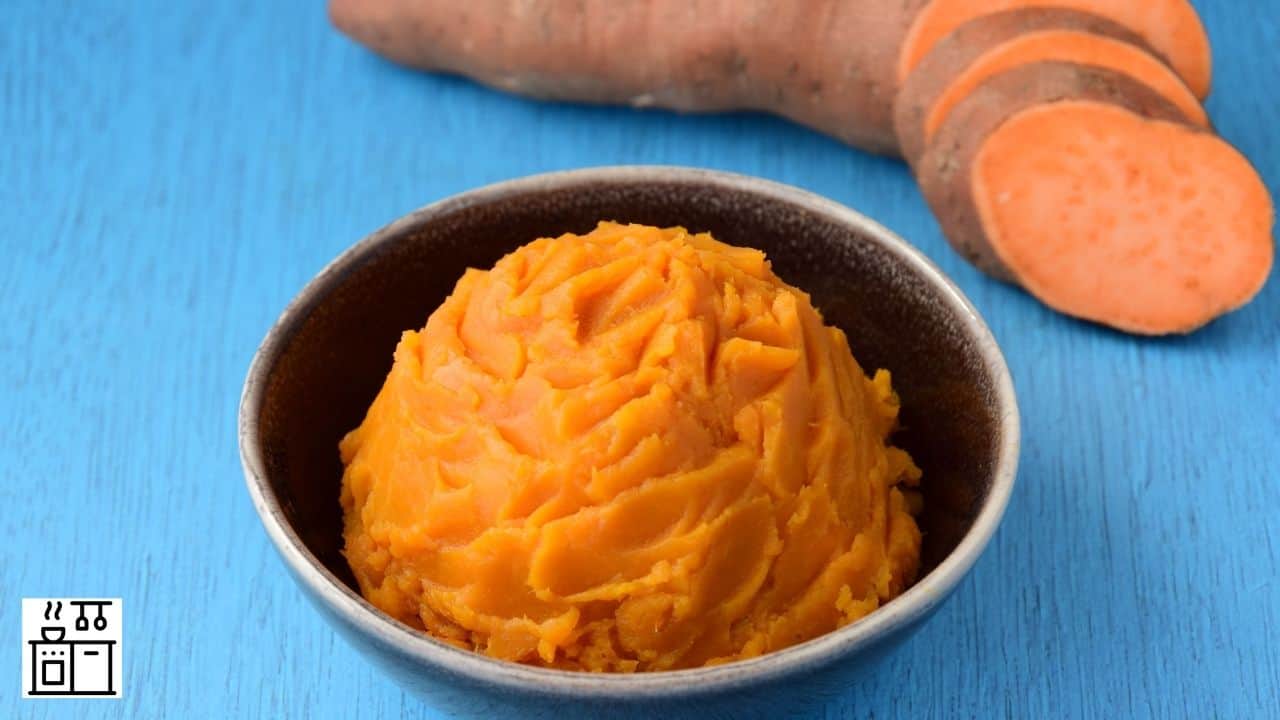
Mashed sweet potatoes are a versatile ingredient that you can have on their own or add to various recipes.
They hold up well in the freezer and thaw easily.
To prepare mashed potatoes, begin by boiling or baking the sweet potatoes.
Peel off their skins when they are cool enough to handle.
Then, mash the sweet potatoes with a fork or wooden spoon, taking care to avoid lumps.
If you want to reduce darkening, NCHFP recommends adding two tablespoons of lemon or orange juice per quart of mashed sweet potatoes. This is for color and does not replace prompt chilling.
Divide the mash into small, shallow containers and refrigerate it promptly. Once chilled, transfer it to freezer-safe bags or containers, leaving half an inch of headspace in containers.
If using airtight bags, squeeze out the excess air before sealing the bags and freezing them.
Label the containers with the date. For mash that you have prepared as a cooked side dish, use the general cooked-leftover guidance above as a planning guide; its best quality will depend on the recipe.
You can even freeze individual portions separately to easily take them out and thaw at different times.
How To Thaw Frozen Sweet Potatoes?
Thaw cooked and frozen sweet potatoes in the refrigerator.
Small portions may thaw overnight, while a large container may need longer. Keep them refrigerated while they thaw, and use refrigerator-thawed cooked leftovers within three to four days.
Do not thaw them on the countertop.
The outside can become too warm while the center is still frozen.
You can also use the defrost setting on your microwave oven to thaw frozen cooked sweet potatoes quickly.
Before microwave thawing, remove any foil or other packaging that is not microwave-safe and put the sweet potatoes in a microwave-safe dish. After defrosting, continue heating immediately until they reach 165°F (74°C). Check several places with a food thermometer because microwaves can heat food unevenly.
Can You Freeze Cooked Sweet Potato Casserole?
You can save a lot of time and effort by doubling up a sweet potato casserole recipe and freezing the excess for another meal.
For a fully cooked casserole, use a shallow, freezer-safe dish. Divide a large or deep casserole into smaller, shallow containers so it cools quickly.
Refrigerate the casserole within two hours of cooking, or within one hour if the temperature is above 90°F (32°C). You do not need to wait for it to reach room temperature before refrigerating it.
Once it is chilled, cover the top of the casserole with parchment or aluminum foil.
Wrap the top of the casserole once again and seal it thoroughly.
Place the casserole inside a ziplock bag to prevent air and moisture from seeping inside.
If you prefer to store the casserole in an airtight, freezer-safe plastic container, close it securely with the lid.
If you are preparing a casserole for freezing, follow the recipe’s directions for any topping; some toppings become soggy when frozen.
A topping that can be frozen separately can go in its own sealed bag alongside the casserole.
When you decide to use the casserole, let it thaw in the refrigerator. A large casserole may need longer than overnight.
Keep it refrigerated until you are ready to reheat it, and follow the dish manufacturer’s instructions for moving it from the refrigerator to the oven.
Follow the recipe’s directions for reheating and adding any topping. Heat the cooked casserole to 165°F (74°C), checking the center with a food thermometer before serving.
Can You Freeze Cooked Sweet Potato Pie?
Yes, you can freeze cooked sweet potato pie. Iowa State Extension includes sweet-potato pie among pies that can be frozen, but the best storage time depends on the filling and recipe. Follow any freezer guidance provided with the recipe you used.
However, the texture of the pie may change slightly from when it was freshly prepared.
To store cooked sweet potato pie for future use, cool it promptly and refrigerate it within two hours of baking, or within one hour if the temperature is above 90°F (32°C).
Once it is chilled, cover it with plastic wrap.
Wrap it once again with aluminum foil to prevent air and moisture from entering.
Alternatively, you can also place it in a freezer-safe container with an airtight lid and freeze it.
When you decide to use the pie, let it thaw in the refrigerator. Allow enough time for the center to thaw too.
Keep the thawed pie refrigerated until you are ready to serve or reheat it.
If you choose to serve the pie warm, follow the recipe’s reheating directions and heat leftover portions to 165°F (74°C). A fixed reheating time will not suit every pie or oven.
Can You Freeze Cooked Sweet Potato Mash?
Cooked sweet potato mash can be frozen in well-sealed, freezer-safe containers or bags.
For mash prepared as a cooked side dish, use the general cooked-leftover storage guidance above as a planning guide. Its best quality will depend on the ingredients and how it was prepared.
To freeze cooked sweet potato mash, prepare the mash without any lumps.
To reduce darkening, you can add two tablespoons of lemon or orange juice per quart of mash, as NCHFP recommends. This optional step protects the color, not the safety of the food.
Cool the mash quickly in small, shallow portions and refrigerate promptly. Once chilled, transfer it into an airtight, freezer-safe container or zip-lock bag, leaving half an inch of headspace in containers.
Remove excess air from the bag, seal it, and label it with the date before placing it in the freezer.
Let the mash thaw in the refrigerator when you need it.
If you use the microwave’s defrost setting, continue heating immediately until the mash reaches 165°F (74°C), checking several places with a food thermometer.
Can You Freeze Cooked Sweet Potato Fries?
Yes, you can freeze cooked sweet potato fries, although their crispness may change after freezing and thawing.
For this method, start with sweet potato fries that have been fully cooked according to your recipe.
Cool them quickly in shallow portions and refrigerate them within two hours of cooking, or within one hour if the temperature is above 90°F (32°C).
Once the fries are chilled, spread them in a single layer on a parchment-lined baking sheet and freeze until firm.
Then, pack them into freezer-safe bags and store them till you need them.
Freezing them separately helps reduce sticking.
You can easily remove the amount you need from the bag and leave the rest undisturbed in the freezer.
Use the general cooked-leftover storage guidance above as a planning guide, and use the fries sooner if you want better quality. When reheating, heat them to 165°F (74°C) before serving.
Related: Does Microwaving Sweet Potatoes Destroy Nutrients? | Do Juicers Leave Pulp? | Does A Masticating Juicer Retains Fiber? | Are Tortillas Bread?
Can You Freeze Cooked Sweet Potato Wedges?
Yes, you can freeze cooked sweet potato wedges, although their texture may change.
For this method, prepare and fully cook the sweet potato wedges according to your recipe.
Cool the cooked wedges quickly in shallow portions and refrigerate them within two hours of cooking, or within one hour if the temperature is above 90°F (32°C). There is no need to blanch them again before freezing.
Once chilled, you can pack the wedges directly into airtight, freezer-safe bags or freeze them in a single layer first so they are easier to separate. Use the general cooked-leftover storage guidance above as a planning guide.
You can also freeze sweet potato wedges in individual portions.
This will make it convenient to retrieve just the amount you need.
When you wish to enjoy the sweet potato wedges, let them thaw in the refrigerator. The time will depend on the size of the portion.
Alternatively, use the defrost setting on your microwave and continue heating immediately until the wedges reach 165°F (74°C). Check several places with a food thermometer before serving.
